RESTORATIVE DENTISTRY AND ENDODONTIC TREATMENT

  1. micro-invasive treatment
  2. biologically oriented approaches
  3. pulp vitality preservation therapies

The goal is to limit damage and, when possible, support the natural regenerative capacity of the tooth.

Final Stage – Tooth Restoration

The aesthetic filling represents the final stage of the treatment process. It restores the anatomy, function, and aesthetics of the tooth. Although it is the most visible part of treatment, it is far from the foundation of modern protocols. Before restoration, multiple biological and biomechanical principles are considered to ensure long-term tooth survival.

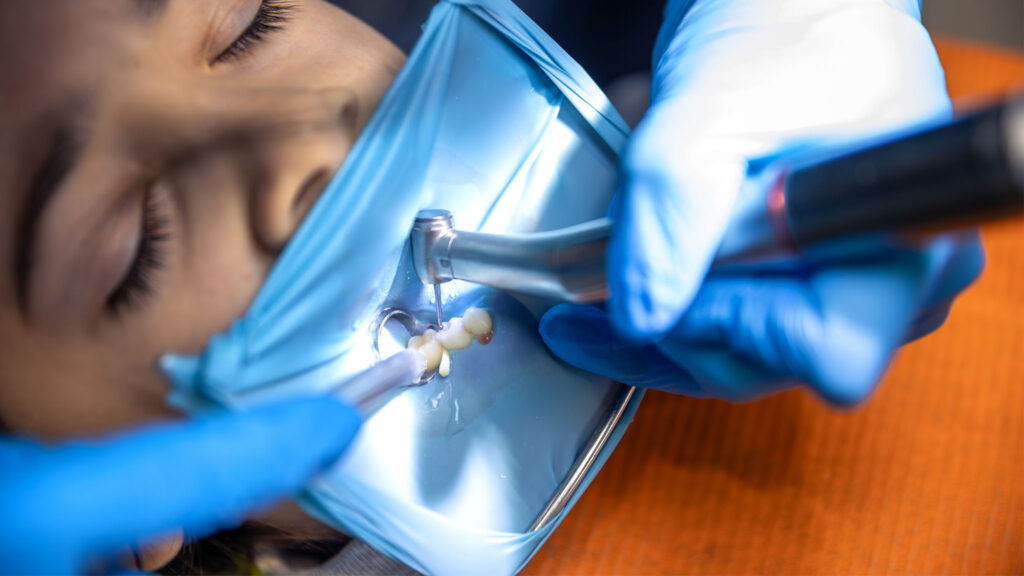
Rubber Dam and Precise Isolation

Working in an isolated and controlled environment, such as with a rubber dam, provides optimal conditions for precise removal of carious tissue, moisture control, and improved adhesion of restorative materials.

This significantly improves the long-term prognosis of the tooth.

When Root Canal Treatment Is Required

When the inflammatory process reaches an irreversible stage and the pulp is permanently damaged, endodontic (root canal) treatment becomes necessary.

Goals of Root Canal Treatment

The main goals are:

  • removal of infection from the root canal system
  • preservation of the tooth in the oral cavity
  • restoration of long-term function

Cariesology and Root Canal Treatment

The Relationship Between Dental Caries and Root Canal Treatment

At first glance, procedures related to caries treatment and root canal therapy may seem different and unrelated. In reality, they are closely connected and represent different stages of the same conservative treatment process in dentistry.

Tooth Structure and the Role of the Dental Pulp

The tooth is composed of enamel and dentin, while its inner part contains the dental pulp – commonly referred to as the “nerve” of the tooth.

The pulp is a living tissue that maintains the biological vitality of the tooth and reacts in the early stages of the carious process. For this reason, caries treatment is not limited to placing a filling, but involves a comprehensive biological approach aimed at preserving tooth vitality whenever possible.

Modern Caries Treatment

Modern dentistry uses various techniques focused on maximal preservation of healthy tooth structure:

  1. micro-invasive treatment
  2. biologically oriented approaches
  3. pulp vitality preservation therapies

The goal is to limit damage and, when possible, support the natural regenerative capacity of the tooth.

Final Stage – Tooth Restoration

The aesthetic filling represents the final stage of the treatment process. It restores the anatomy, function, and aesthetics of the tooth. Although it is the most visible part of treatment, it is far from the foundation of modern protocols. Before restoration, multiple biological and biomechanical principles are considered to ensure long-term tooth survival.

Rubber Dam and Precise Isolation

Working in an isolated and controlled environment, such as with a rubber dam, provides optimal conditions for precise removal of carious tissue, moisture control, and improved adhesion of restorative materials.

This significantly improves the long-term prognosis of the tooth.

When Root Canal Treatment Is Required

When the inflammatory process reaches an irreversible stage and the pulp is permanently damaged, endodontic (root canal) treatment becomes necessary.

Goals of Root Canal Treatment

The main goals are:

  • removal of infection from the root canal system
  • preservation of the tooth in the oral cavity
  • restoration of long-term function